





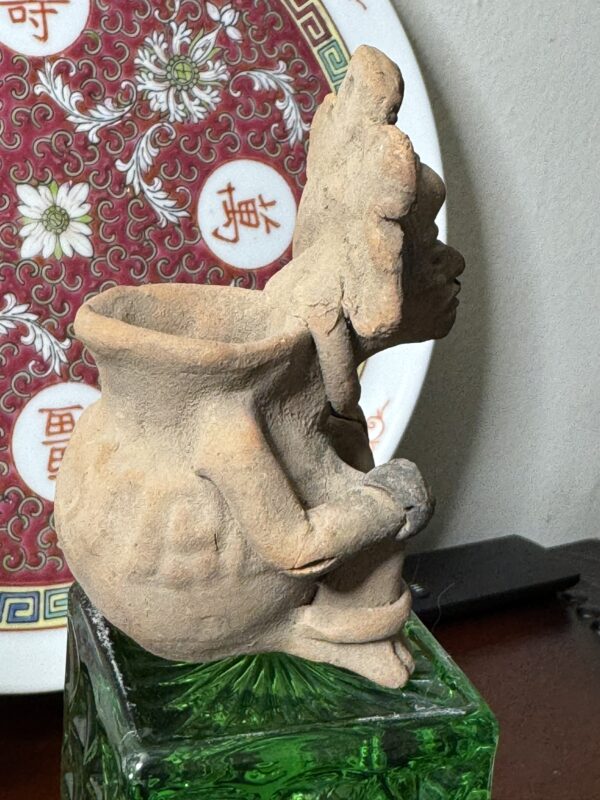
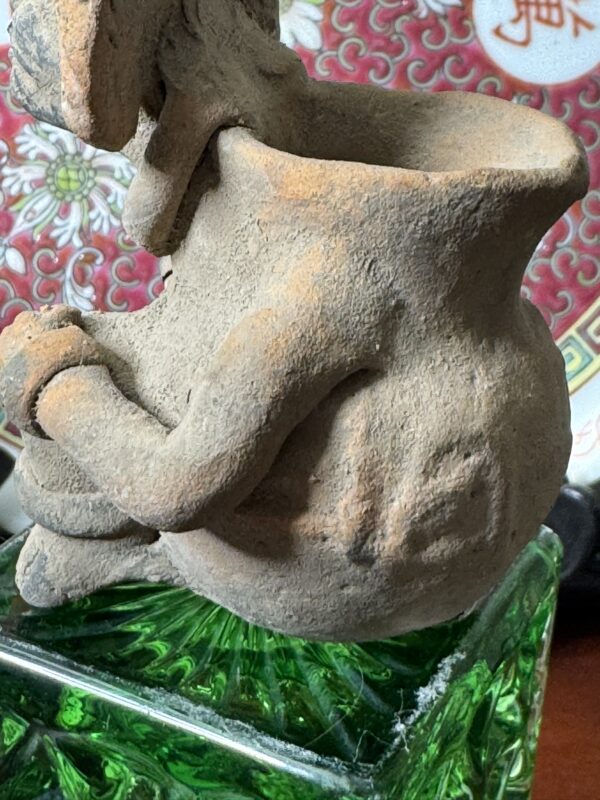
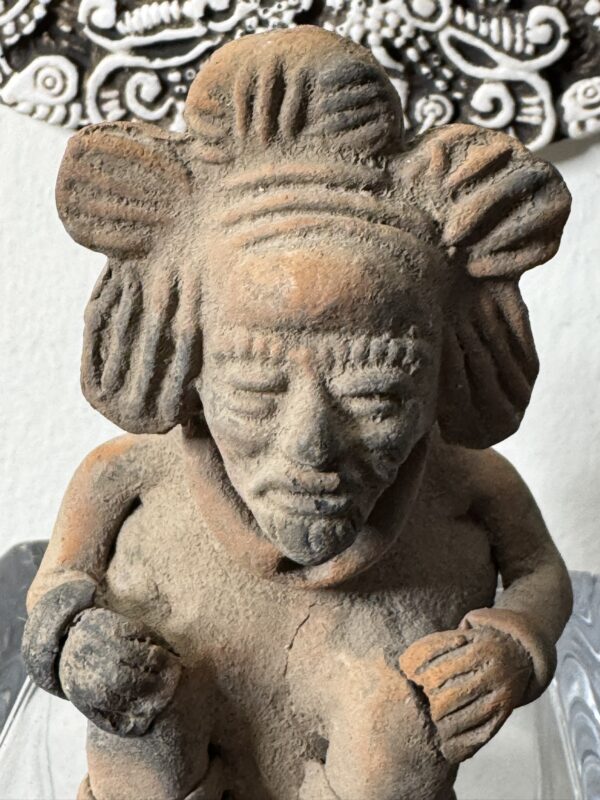
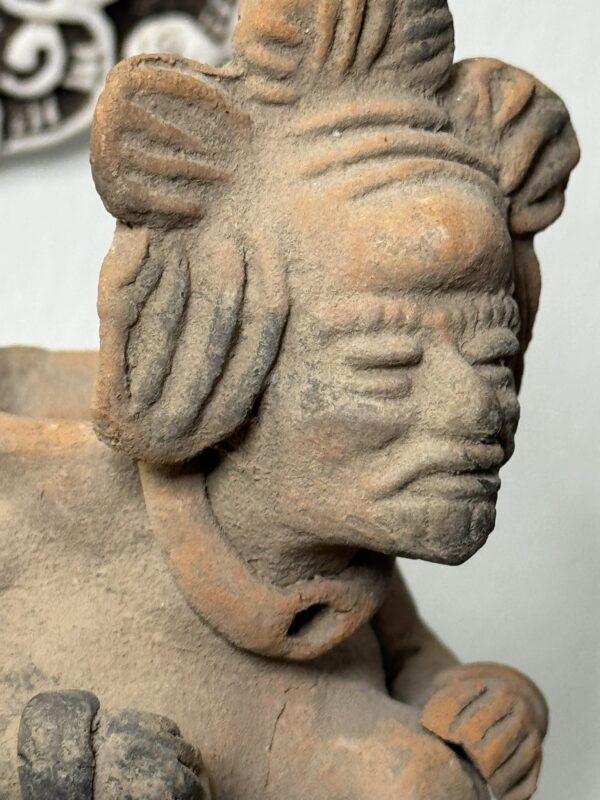


Ancient Shaman’s Ceremonial Offering Vessel
$1,875.00
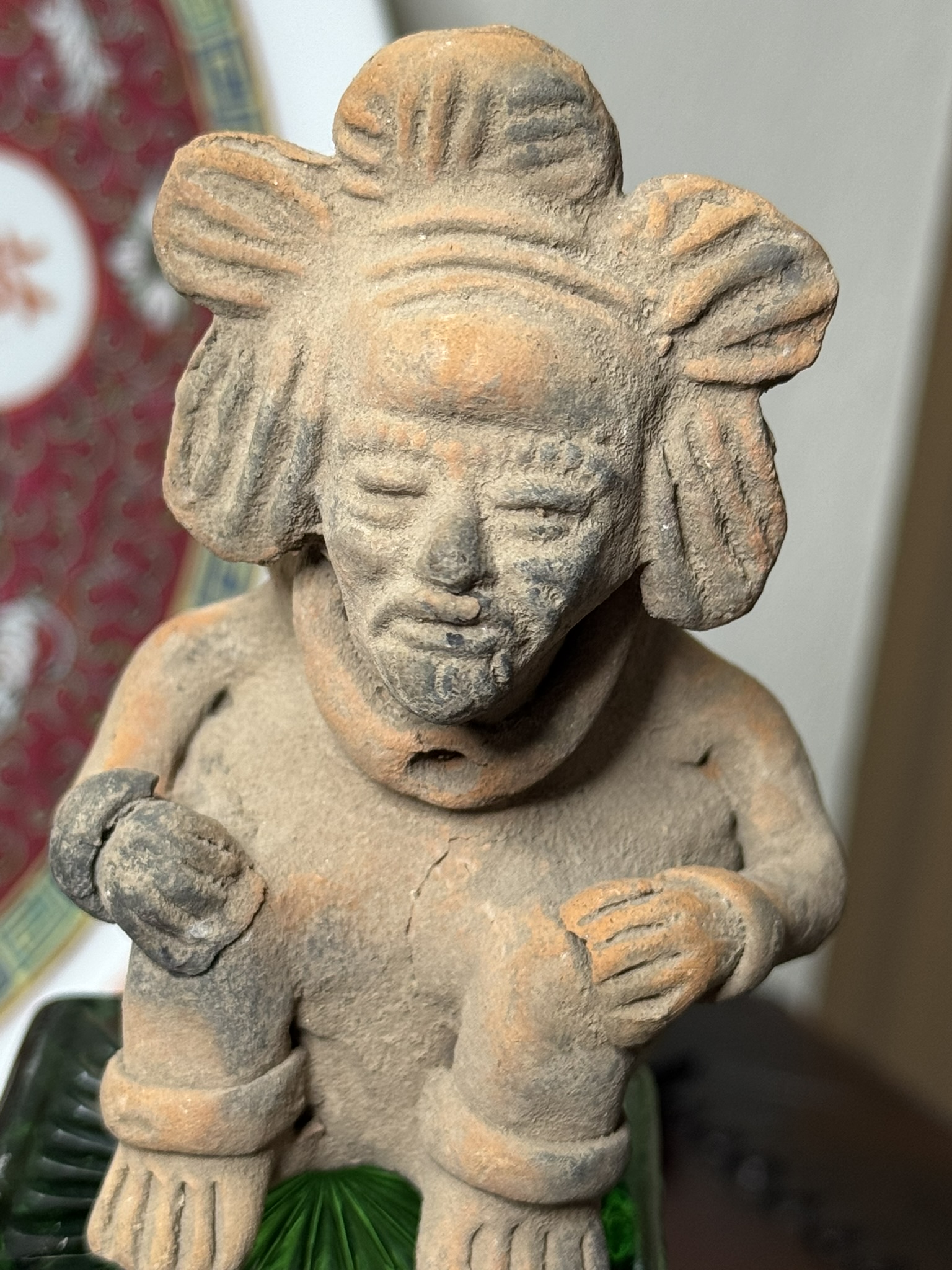
Authentic Pre-Columbian Jama-Coaque Terracotta Shaman Effigy Vessel.
For the ancient shaman, this consecrated vessel served as a vital spiritual anchor, designed to hold and potentize sacred plant medicine during intense vision trances. The figure itself functioned as a ritual alter-ego, symbolically grounding the shaman’s consciousness while they navigated the spirit world to restore balance and cosmic order.
1 in stock
Description
Origin & Culture
- Region: Coastal Ecuador, Manabí Province.
- Culture: Jama-Coaque (Regional Development Period).
- Settlement Context: Produced by highly skilled, institutionalized craft workshops operating under specialized chiefdoms.
Age & Historical Timeline
- Era: Approximately 350 BCE to 500 CE.
- Chronology: Pre-Columbian, dating back roughly 1,500 to 2,300 years.
Condition & Archaeological Evidence
- State: Excellent antiquity condition with complete structural integrity.
- Physical Wear: Natural micro-pitting, ancestral firing blemishes, and stable micro-fissures from long-term burial.
- Authenticity Markers: Multi-layered mineral matrix decay, calcification, and a rich, variegated matte oxidation layer across the clay surface.
- Interventions: Pristine and unaltered with zero modern restorations or touch-ups.
Decor Style & Aesthetic Value
- Category: High-end ethnographic art / Ancient South American design.
- Style Movement: Pre-Columbian regional realism with expressive, stylized anthropomorphic features.
- Artistic Technique: Masterful blend of mold efficiency for the flared headdress and custom, free-hand clay appliqué coil-work for the bulky ceremonial jewelry.
- Display Value: Powerful, sculptural silhouette and a rich earthy color palette that provides an exceptional texturing element for sophisticated, curated interior spaces.
Ceremonial & Practical Function
- Primary Use: Consecrated ritual container designed to store, age, or dispense sacred plant medicine, such as ayahuasca, infusions and chicha libations. Note that the Jama-Coaqua people did not use ayahuasca, but instead the shaman would have used this for San Pedro Cactus, Wilka, Coca Leaves & Lime Snuff.
- Spiritual Role: Functioned as a living energetic alter-ego or physical anchor to ground the shaman’s consciousness during a vision trance.
- Iconography: The bare chest contrasted with immense status indicators—bulky cuffs and the central Spondylus setting—directly symbolizes a leader stripped of everyday identity to wield sacred cosmic authority.
Description:
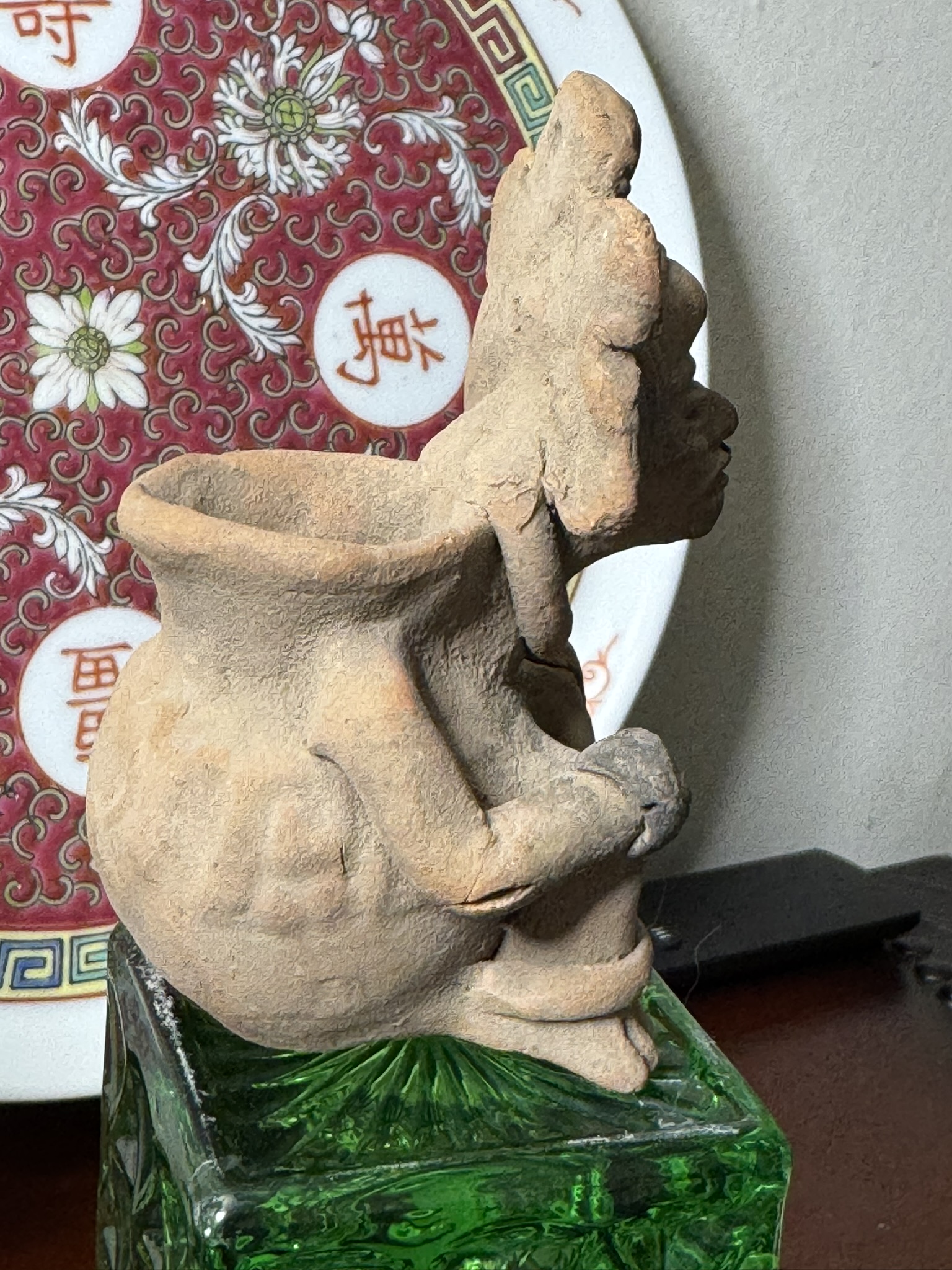
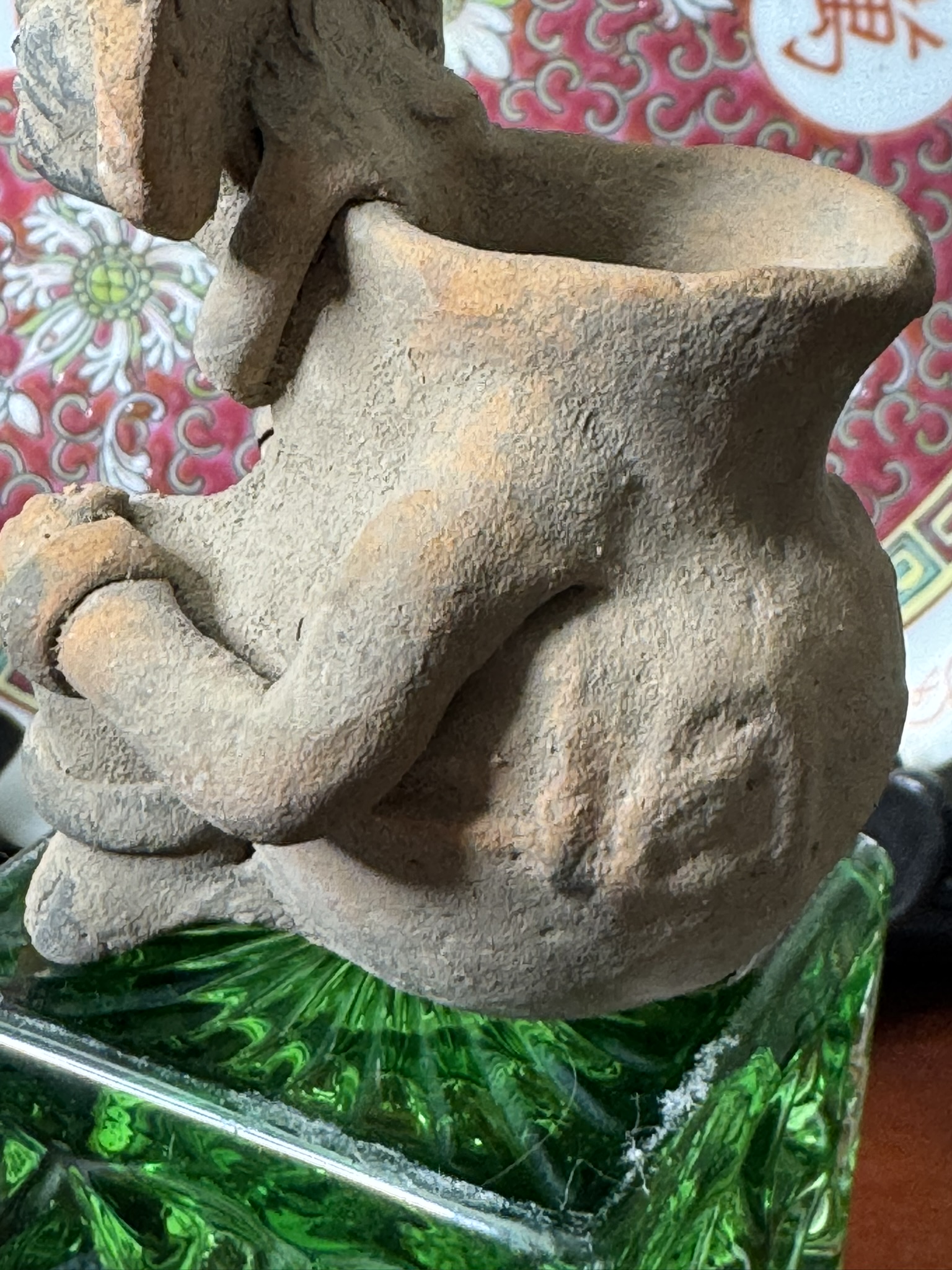
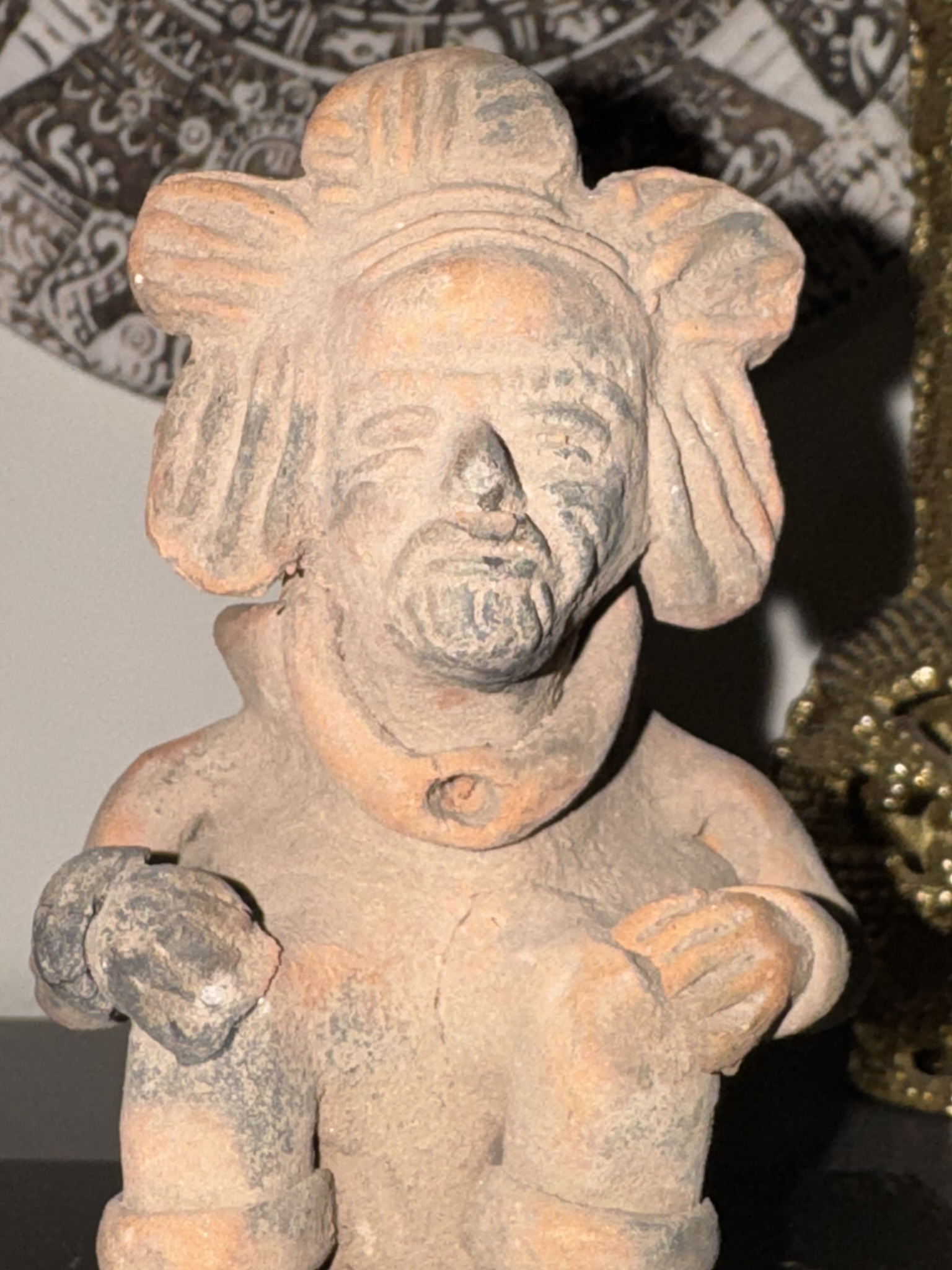
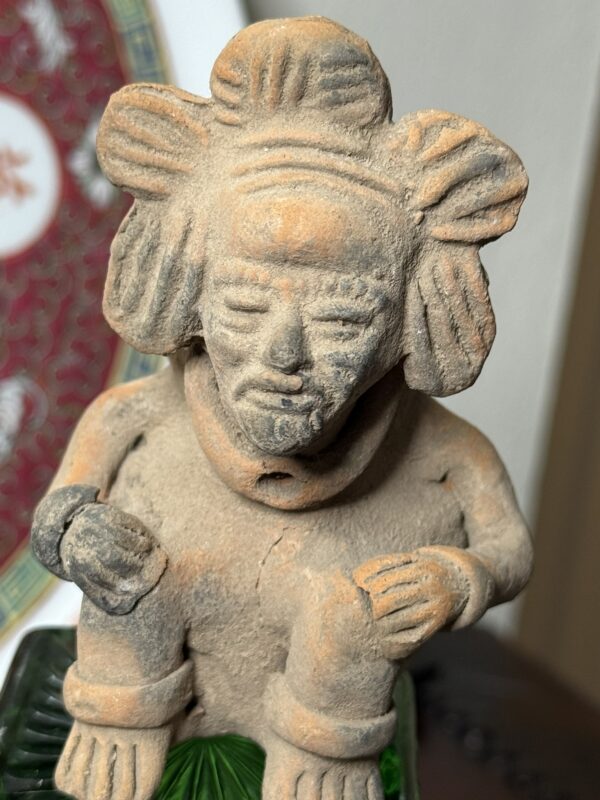
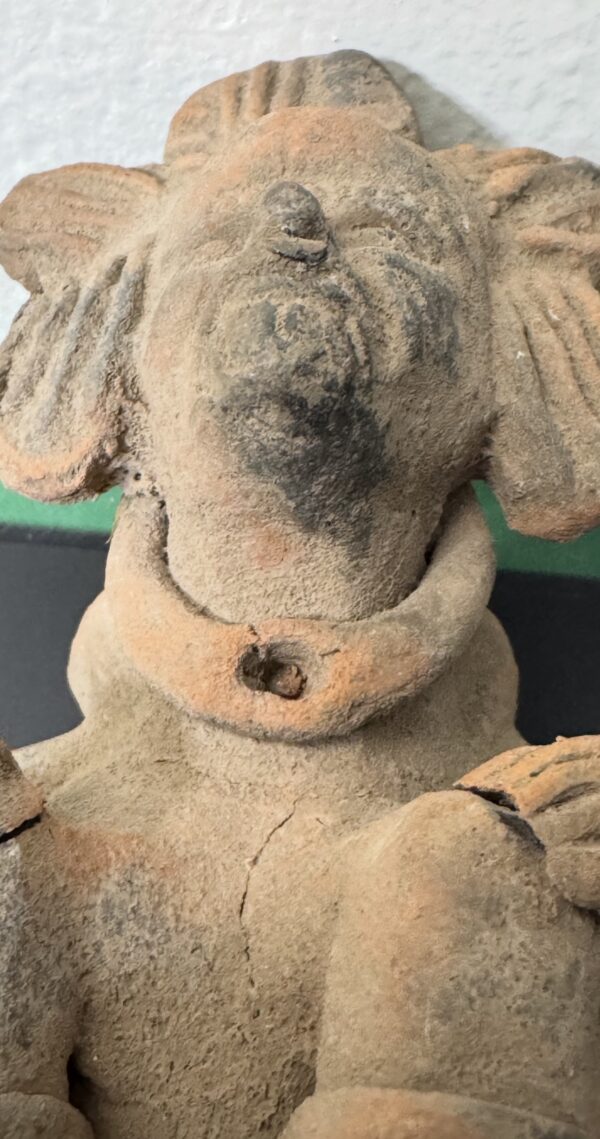
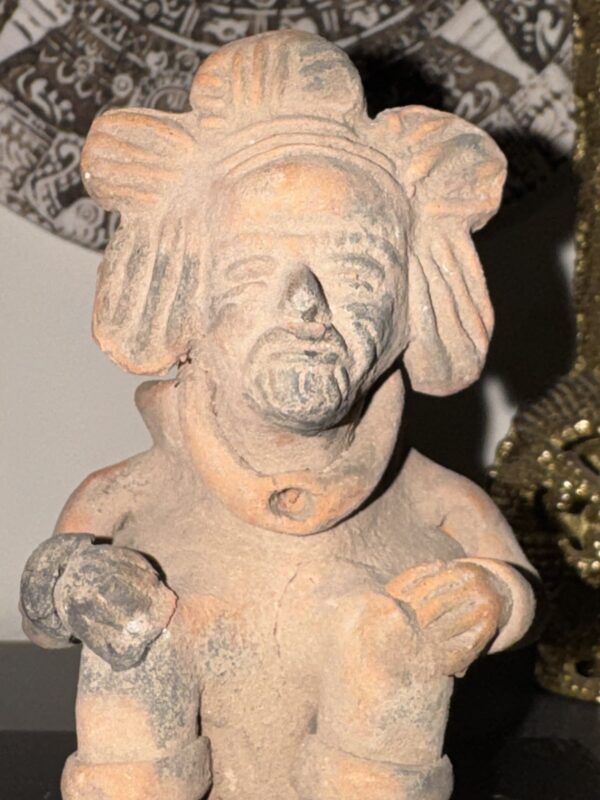
An exceptional, highly expressive Pre-Columbian hand-modeled ceramic figural effigy vessel or ritual plant medicine container from the ancient Jama-Coaque chiefdoms of coastal Ecuador. The vessel features a stylized anthropomorphic figure integrated seamlessly onto the front exterior of a rounded jar, depicting a seated or crouching shaman or elite elder in a traditional ritual posture.
An exceptional, highly expressive Pre-Columbian hand-modeled ceramic figural effigy vessel or ritual plant medicine container from the ancient Jama-Coaque chiefdoms of coastal Ecuador. The vessel features a stylized anthropomorphic figure integrated seamlessly onto the front exterior of a rounded jar, depicting a seated or crouching shaman or elite elder in a traditional ritual posture.
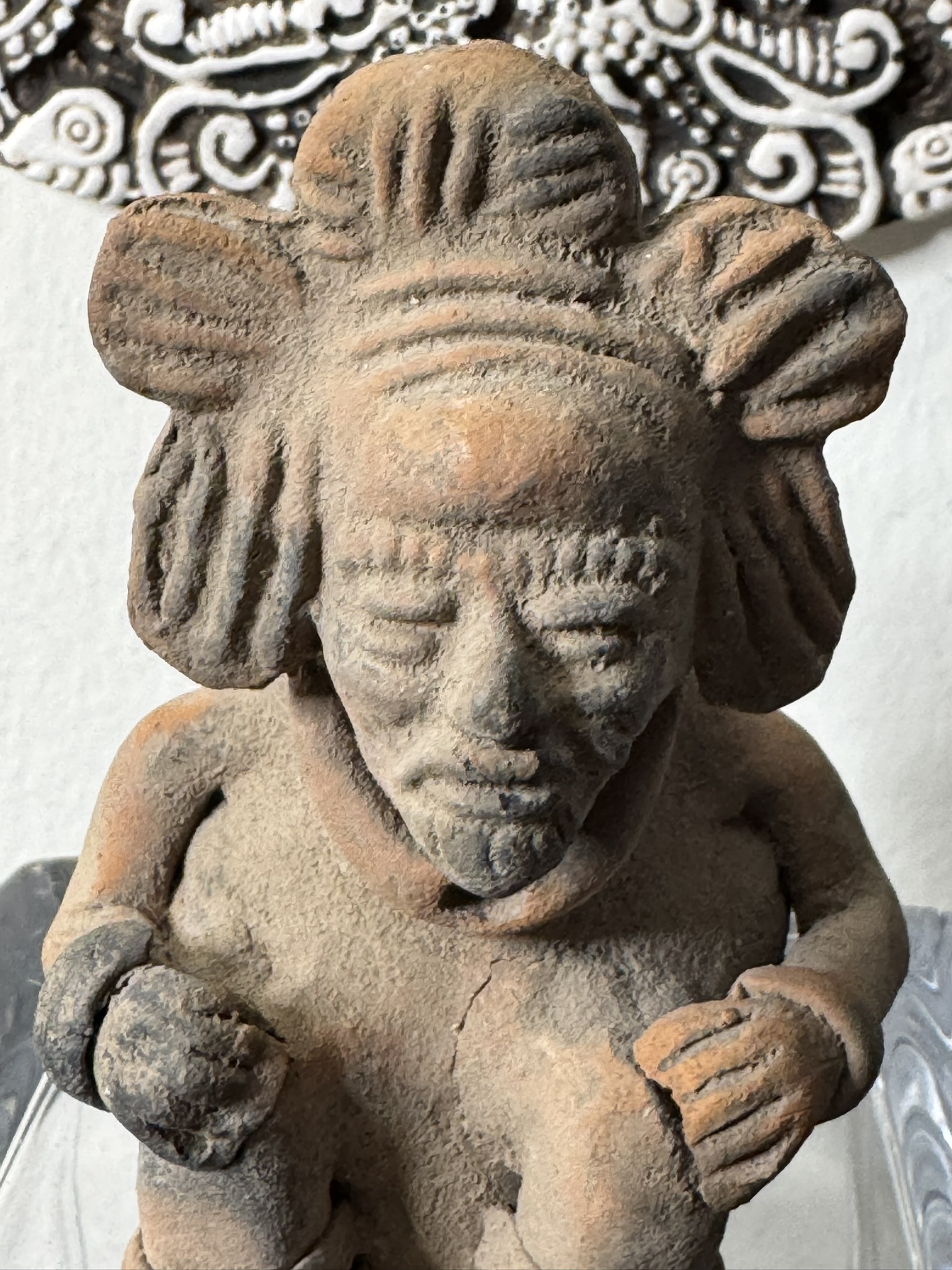
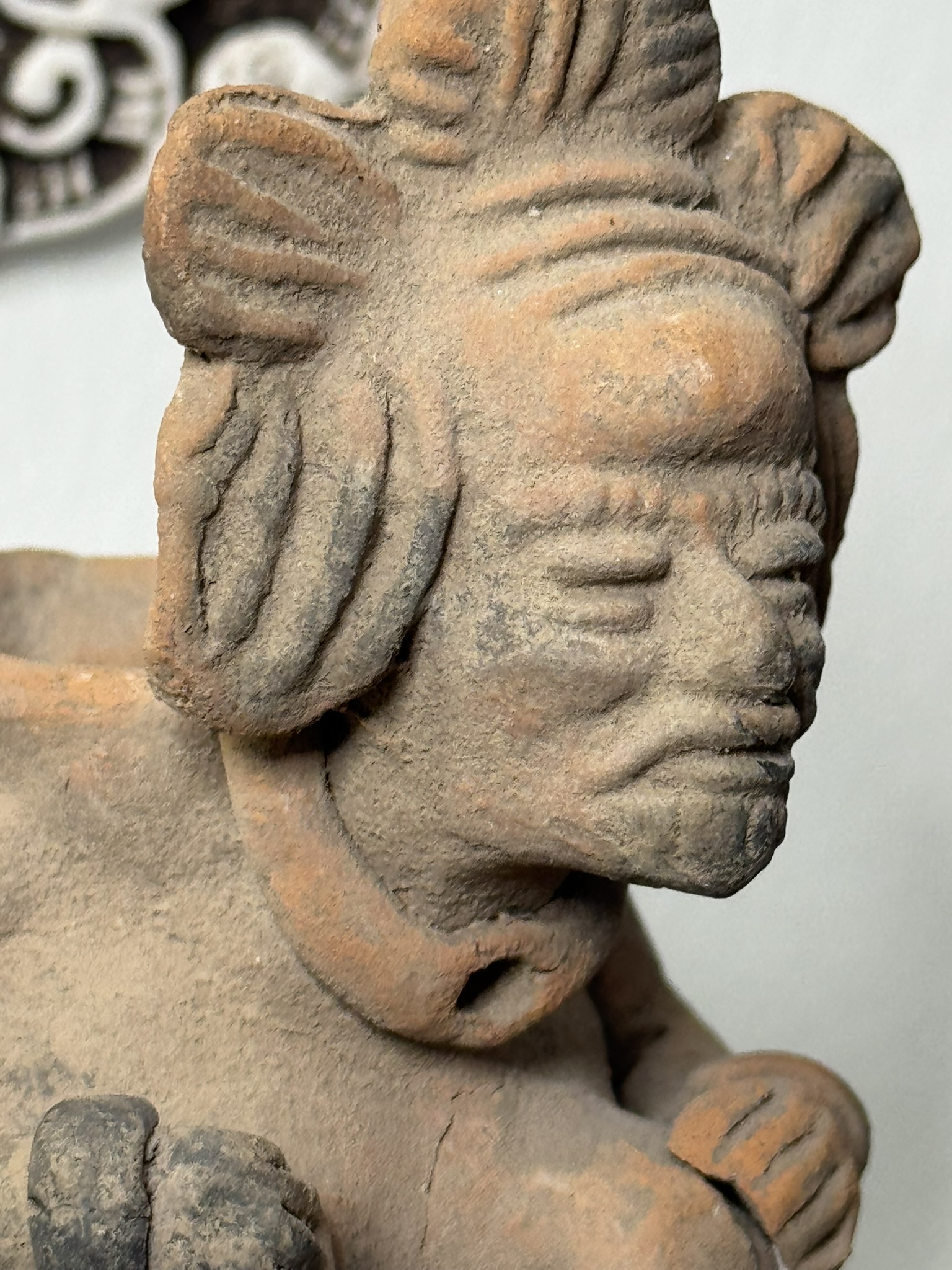
The figure features deeply incised, mature facial characteristics including a prominent aquiline nose, heavy brow, and a downturned expression signifying social authority and spiritual wisdom. The head is adorned with an elaborate, flared master-molded ceremonial headdress characteristic of the regional elite.
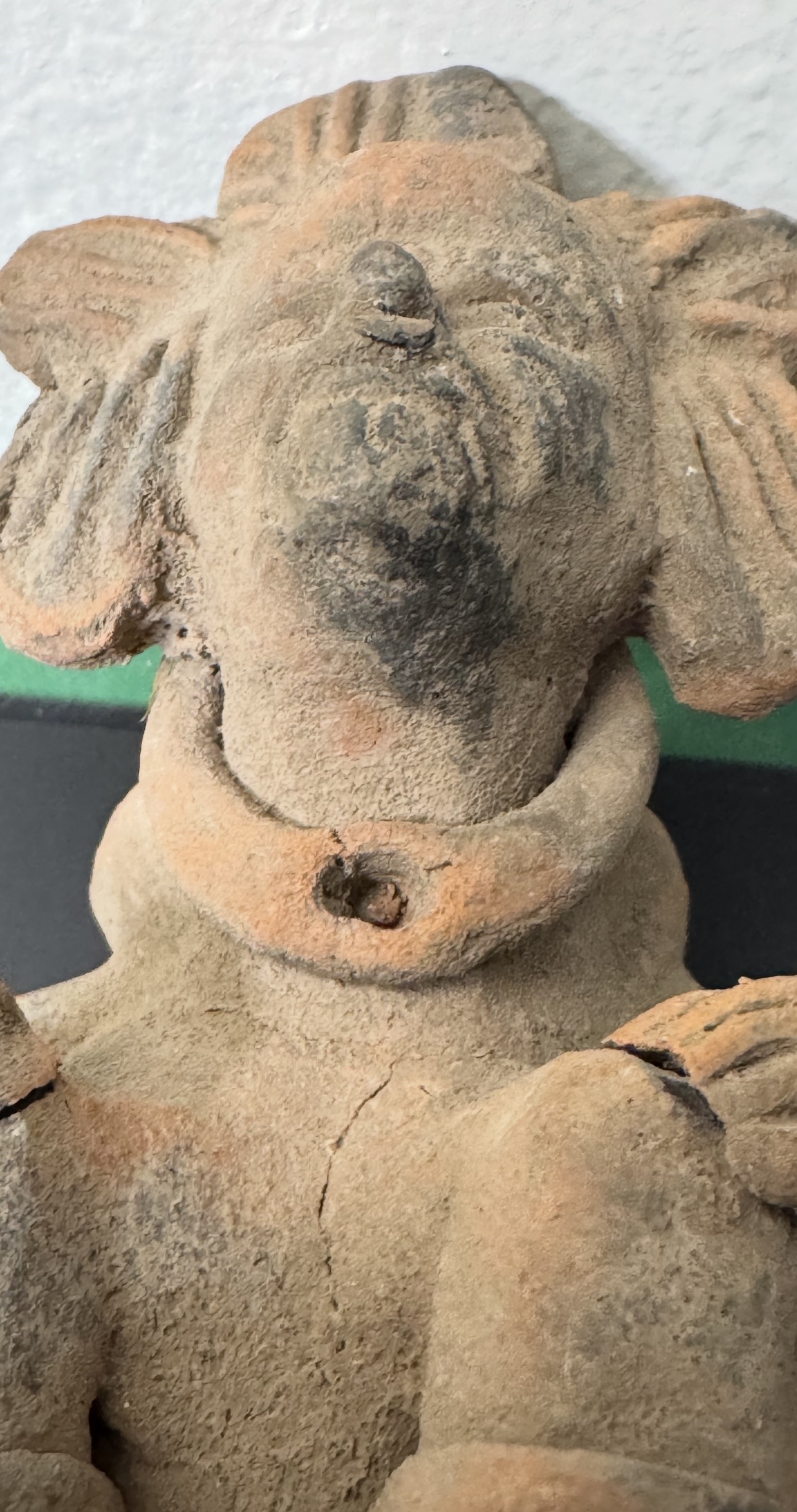
Of exceptional note is the prominent ritual regalia executed via thick clay appliqué coil-work, featuring exaggerated bands on the wrists and ankles. The thick neck collar or choker torque features a highly diagnostic, blind-drilled center socket. Macro photographic analysis reveals an intact, ancient calcified fragment nestled deep within the recess, showing the fibrous, layered structure and faint crimson-orange tint highly consistent with the degraded inner core of a sacred Spondylus marine shell inlay. The overall unglazed surface displays superb, authentic indicators of prolonged burial, including rich variegated oxidation, minor ancestral firing blemishes, localized mineral encrustations, and an authentic aged matte texture consistent with ancient Pacific coast clay compositions.
Adding interest to this incredible antiquity is the geometric and abstract zoomorphic motifs deeply rooted in Pre-Columbian Ecuadorian iconography.
Tiered Geometric Panels: The blocky, structured patterns carved into the lower side of the cup resemble traditional escalonado (step-fret) design. In ancient Andean and coastal Ecuadorian belief systems, these stepped steps metaphorically bridged the distinct layers of the cosmos: the underworld, the earthly plane, and the celestial spirit world.
Sello Motifs: These exact layout styles directly match the patterns carved into ancient Jama-Coaque ceramic stamp seals (sellos). Master potters used flat and cylindrical clay stamps featuring these repetitive step-and-curve glyphs to decorate elite ceremonial textiles, print patterns on body skin, or press sacred insignia into ritual items.
Condition Report:
Excellent antiquity condition overall, presenting characteristic surface wear, minor pitting, and stable micro-fissures commensurate with an authentic archaeological lifecycle. No modern alterations. An extraordinary, premium example of ancient South American shamanic and lapidary-imitative ceramic art.
Excellent antiquity condition overall, presenting characteristic surface wear, minor pitting, and stable micro-fissures commensurate with an authentic archaeological lifecycle. No modern alterations. An extraordinary, premium example of ancient South American shamanic and lapidary-imitative ceramic art.
Additional information
| Age | |
|---|---|
| Medium | |
| Origin | |
| Style |
Related products


